Know what it's worth. Anywhere. Including the basement with no bars.
Photograph something in a thrift shop. A local open-weight model reads it, your own sold history and live listings price it, and you get the one number that actually matters: the most you should pay.
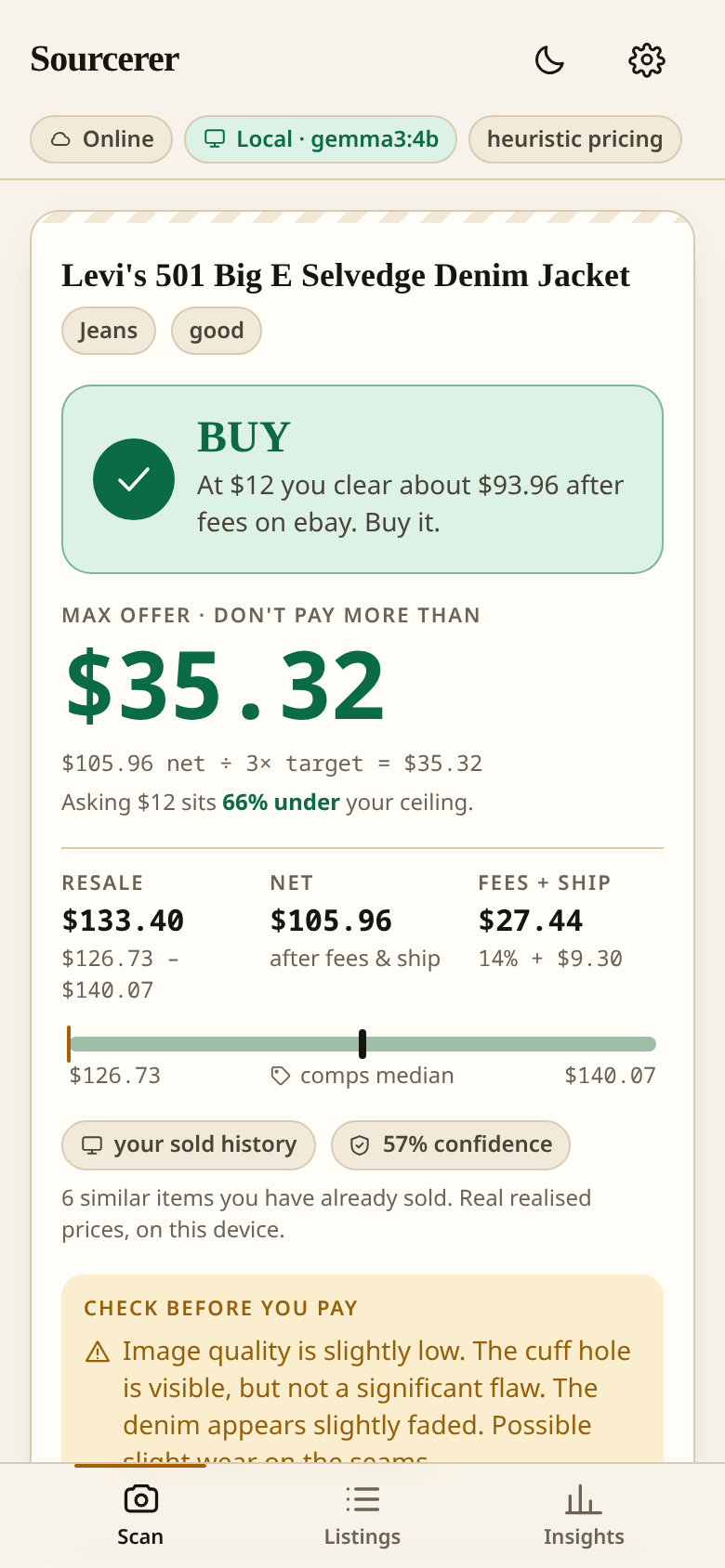
An unedited run, no cloud, no GPU server: 8 CPU cores, 15.4 GB of RAM, and a 4 GB card that holds part of the model. Verdict in about nine seconds.
Three steps, one number
The loop a reseller already runs in their head — with the part their memory is bad at, made reliable.
Read the item
Gemma 3 runs locally on the photo. Brand, model, era, size, flaws, and the keywords a reseller would actually search.
Price the market
Live listings when there's signal. Your own sold history when there isn't. The app always tells you which one it used.
Decide the offer
Fees, shipping, packaging and your target margin, solved for the ceiling. BUY, MAYBE or PASS.
See it work
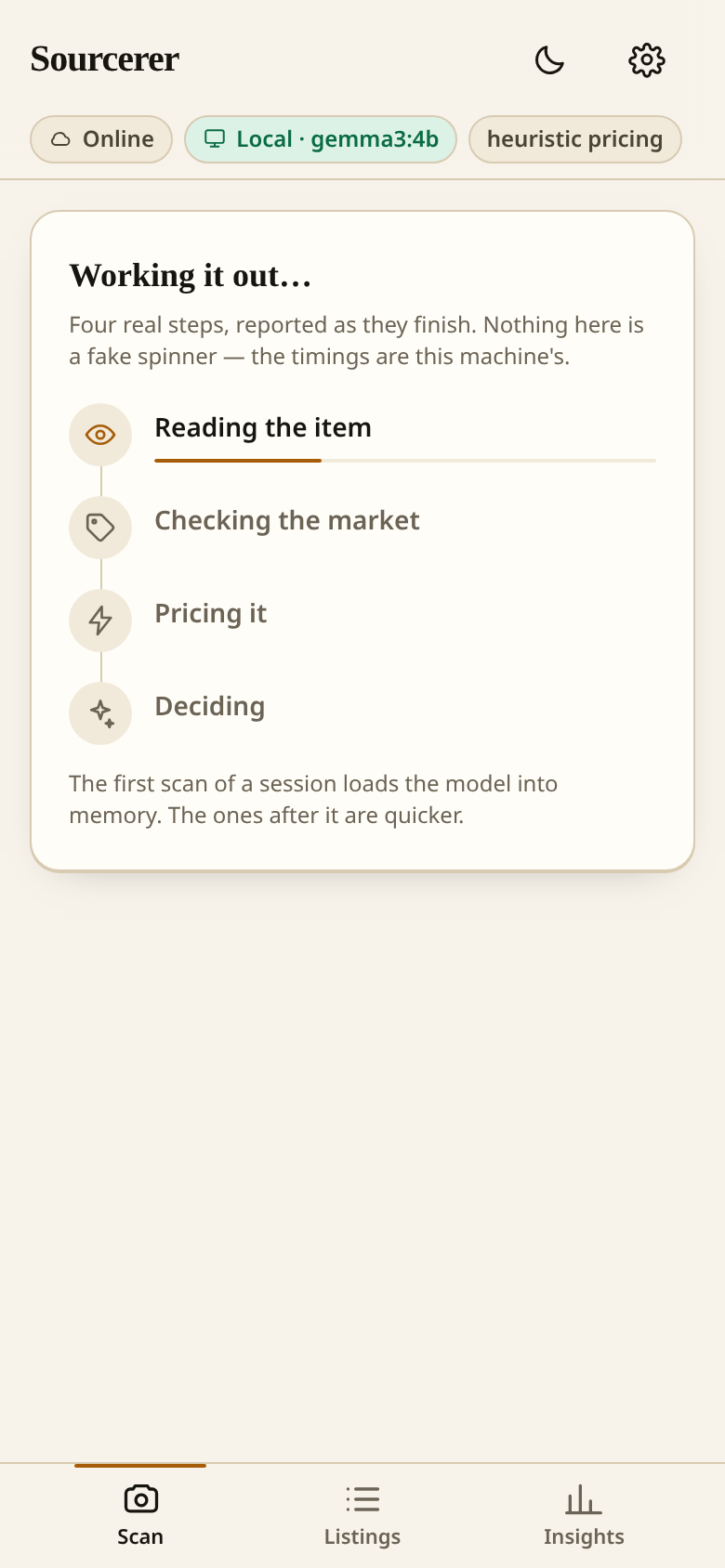
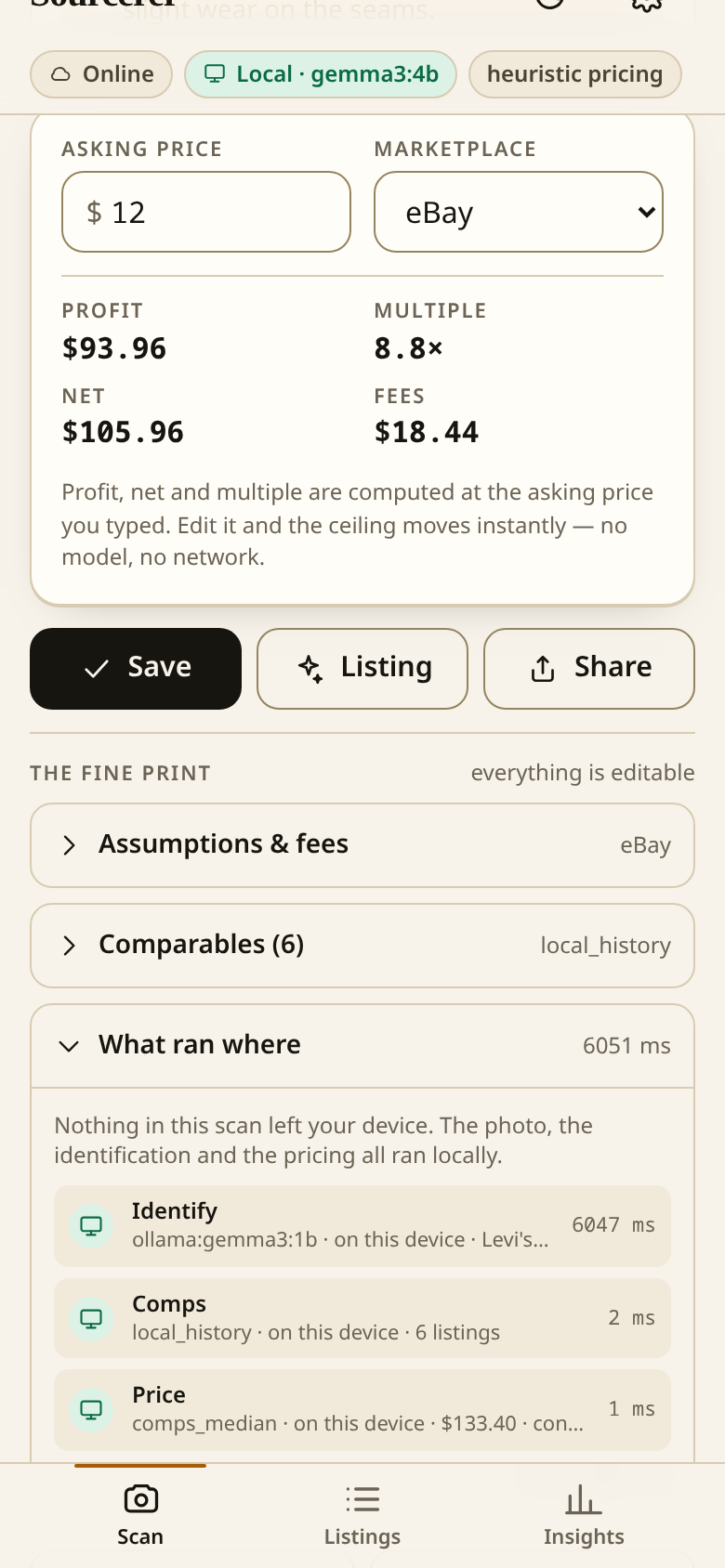
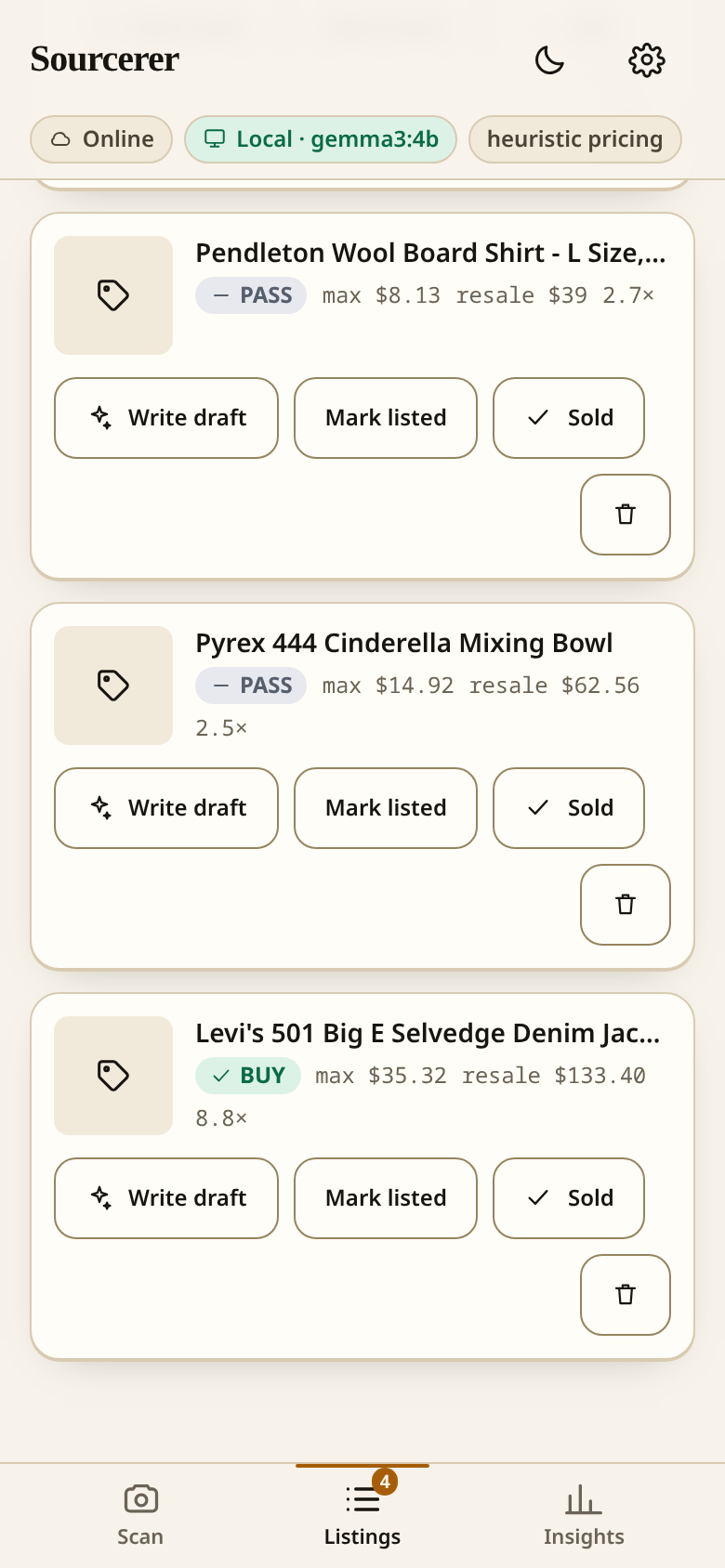
An unedited run: describe the item, type the price on the tag, get a verdict. No network involved.
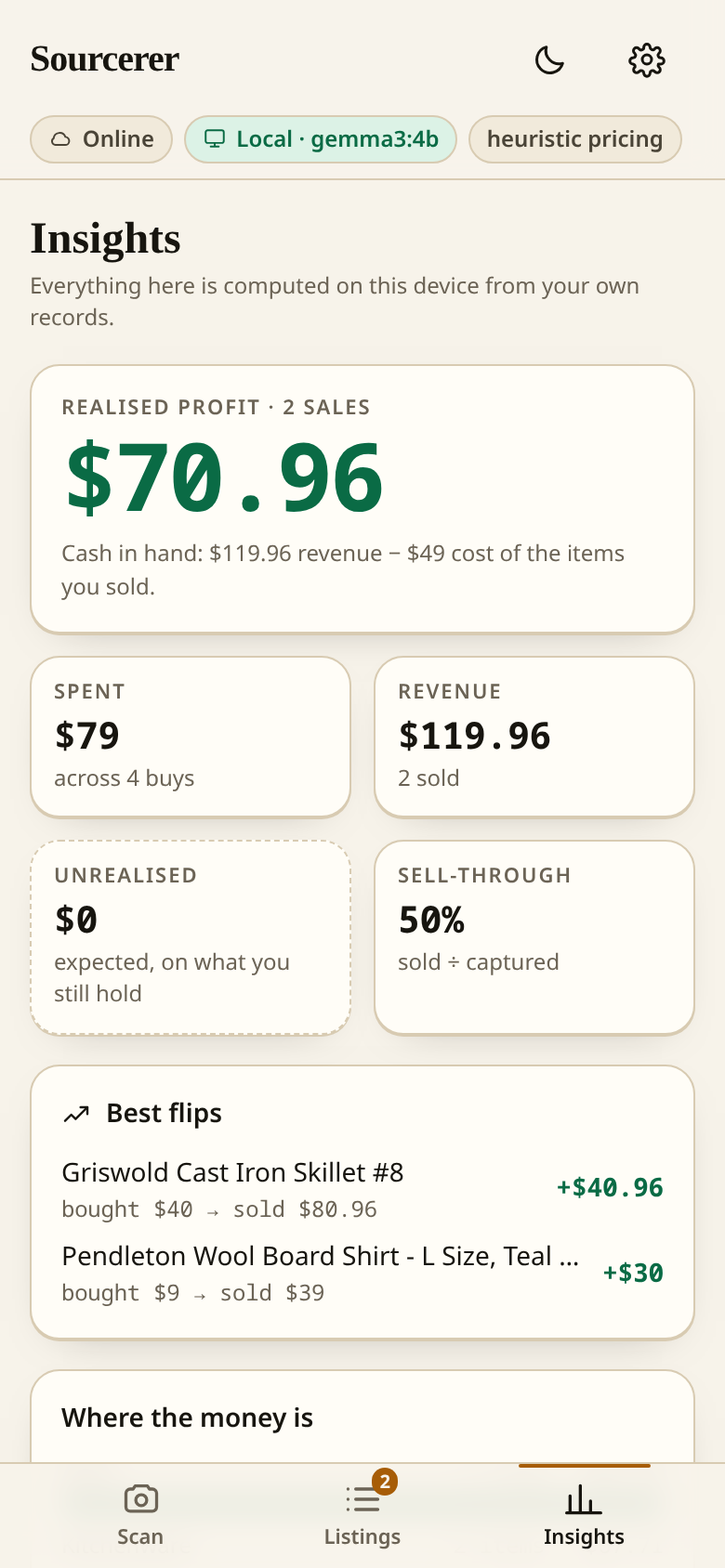
Why the brain has to be on the device
The decision happens in a basement with no bars, so the model has to be in your hand. That isn't ideology — it's plumbing.
The model reads
fuzzy · tolerant of bad light · right most of the time
Identification is exactly the job a small open-weight vision model is good at. It doesn't need to be perfect; it needs to be fast, private and free at the margin.
Arithmetic decides
deterministic · unit-tested · identical offline
The money is never left to a language model. Fees, shipping and the max offer are plain functions, so the number you get in a basement equals the number you get online.
Honest limits
- It is slow on CPU. About nine seconds per item from a typed note once the model is warm, and thirty to forty seconds from a photo, with roughly seventy-five seconds on the very first scan of a session while the weights load. A GPU changes this; this laptop's doesn't.
- eBay's real sold prices are not available. eBay moved completed listings behind a login and the search API's sold filter went with them. The app returns live asking prices, labels them as asking, and applies a visible 14% haircut. It is a range, not a promise.
- Reading and tool-calling are different models. Gemma 3 4B is a reader — vision and completion — and has no
toolscapability, so the advisor loop runs on a small tool-capable open model beside it. The app reports which is installed rather than failing quietly. - The price model needs your data. With no sold history it falls back to condition-adjusted comps and a deliberately pessimistic guess. It gets personal only after you log sales.
Built with
Open weights at the core, open source around it. Every one of these sits behind a fallback, so removing any of them degrades the app instead of breaking it. Where a key exists, the integration has been verified against the live service — one table records the status of all of them, including the ones that are wired but not demonstrated.